
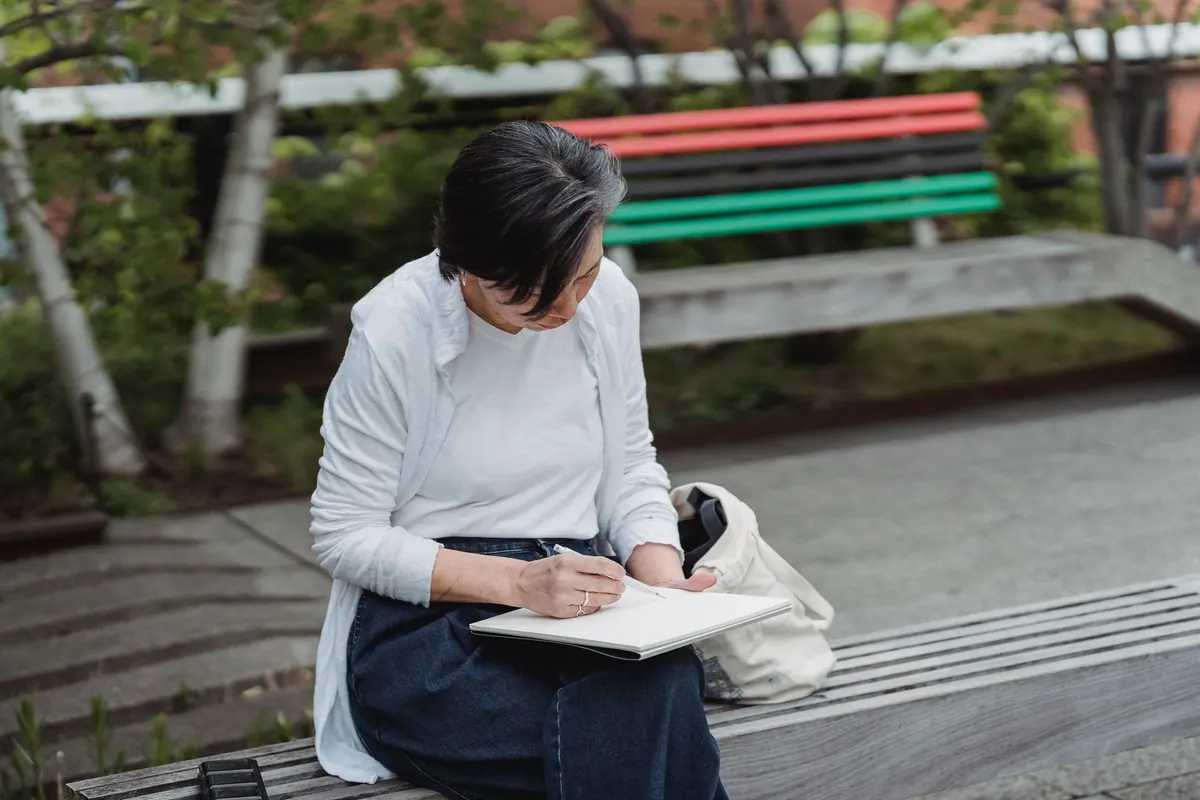
A park gives you something most drawing subjects don't: room to make mistakes. Nobody minds if you sit on a bench for half an hour with a sketchbook, and if the first drawing goes wrong you can turn the page and start again. What most people lack isn't talent or materials — it's a shape for the session.
Thirty minutes is enough for a proper sketch. Not a finished painting, but a real record of a place: composition, line and a few washes of colour. The timings below are deliberately tight, because a deadline is the quickest cure for fiddling.
Pack Light, Then Take Something Out
Everything should fit in one hand. If you need two trips to the car, you'll sketch less often, and the small kit also lets you work standing up, on a wall or on a slope.
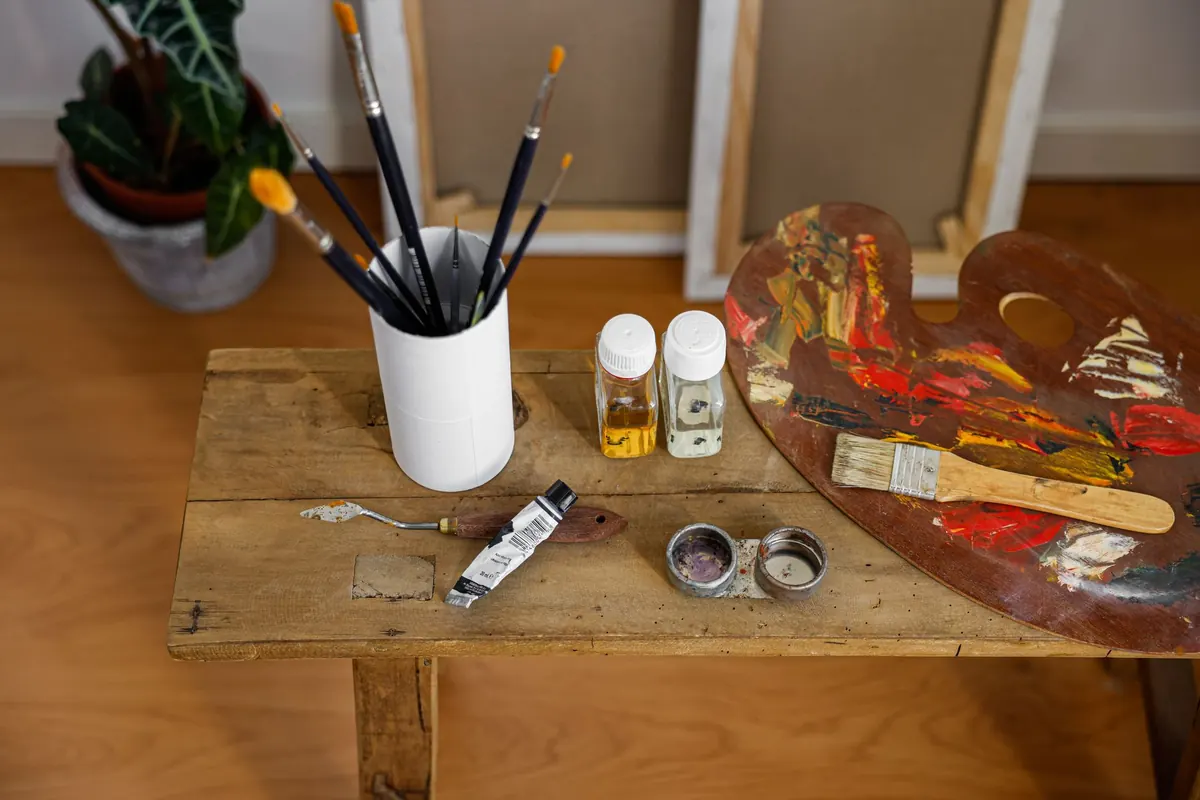
- A5 or A6 sketchbook with paper heavy enough to take a light wash — around 200gsm is comfortable
- A waterproof fineliner or a fountain pen filled with document ink
- A small watercolour tin with six to eight pans: a warm and a cool version of each primary, plus a green and a grey-brown
- One round brush, size 6 or 8, with a good point
- A water brush or a small screw-top pot of water
- A cloth or a folded piece of kitchen paper
- A 2B pencil and a soft eraser
Leave the easel, the stool and the twenty-four-pan box at home. Sitting on a bench with a small book on your knee changes how you draw — looser, quicker, less precious.
Minutes 1–3: Find a View You Can Finish
Walk for sixty seconds, then commit. Looking for the perfect view eats the whole session. Instead, check three things: is there something to anchor the foreground, something in the middle distance, and something tall enough to break the horizon? A bench, a pond and a tree will do nicely.
Before you draw anything, make a thumbnail in the corner of the page. A box about five centimetres wide is plenty. Scribble in three or four lines to place the horizon and the main mass, and decide where your focal point sits. If you can't see the whole scene without turning your head, you've chosen too much — crop in and draw one tree, or one corner of the pond, rather than the whole park.
Minutes 3–12: Block In the Big Shapes
Work in pencil or very light pen and keep your lines faint; most of them will disappear under the ink anyway. Start with the largest shape, not the most interesting one. If the main tree is your subject, place the trunk first, then draw the canopy as a single envelope shape rather than a cloud of leaves.
Check angles by holding your pencil up against the scene, then transferring that slope to the page without tilting your head. Compare one shape against another: the bench back is half the height of the bin, the bridge is twice as wide as the gap between the posts. This is the whole job of the blocking-in stage — proportion and placement, nothing else.
A quick way to judge scale
Pick one object, such as the bench, and treat it as a unit of measurement. The tree is roughly five benches tall; the far bank is two benches away. It sounds crude, but it stops drawings drifting out of proportion.
Minutes 12–22: Linework That Breathes
Switch to pen. Draw slowly enough to be deliberate and quickly enough to avoid a wobble. Vary the weight: heavier marks at the base of the picture and on foreground objects, lighter and thinner lines for anything further away. Thickness alone suggests distance, even before you add colour.
Don't outline everything. Break a line where light hits an edge, and if a mark goes wrong, draw over it rather than erasing — overlapping lines read as texture and energy. Foliage is best drawn in clusters: loose loops, small scribbles, short hatched strokes, all grouped into the shape you blocked in earlier. Save sharper detail for two or three places only, such as a branch fork or the shadow under the bench.
Add one or two people for scale, but be quick. Anyone walking will be gone in seconds, so either catch a figure in three strokes and accept the result, or choose someone who is staying put — a reader, a parent with a pushchair, someone feeding the ducks. A seated figure takes about twenty seconds and gives the whole sketch its sense of size.
Minutes 22–28: Watercolour, Kept Simple
Limit yourself to three or four colours. Decide now which ones, mix them before you start, and resist adding more. Work from light to dark and from large to small.
- Sky and any large pale areas, if you're painting them at all. A few strokes, then leave it alone.
- The biggest mass of colour, usually foliage or grass. One wash, mixed once, applied confidently.
- Shadows. This step does more for depth than any amount of detail, so put them in while the earlier washes are still slightly damp if you want soft edges, or wait until dry for crisp ones.
- One or two accents of your strongest colour — a warm note on a sunlit wall, a cool note in the water.
Keep the brush drier than you would indoors. A water brush can flood a small page very quickly, and a puddle will buckle thin paper. If a wash spreads further than you wanted, lift the edge with a clean, barely damp brush rather than dabbing at it with a tissue.
When the light or weather turns
Sunlight moves, so shadows are the first thing to change. Paint them early and don't chase them later. If it starts raining, move under a bandstand or a tree and finish in pen with hatching instead of colour — the sketch still works.
Minutes 28–30: Stop, Note, Move On
Stop while the sketch still looks alive. Write the date, the place and one line about the weather along the edge of the page. Then close the book. Resist the urge to tidy it up at home; an urban sketch is a record of a particular half hour, and the wobbly bits are part of that record.
Do It Again Next Week
The value of a thirty-minute session is repetition. Come back to the same park at the same time, sit on the same bench and sketch the same view. By the fourth week you'll notice you're spending less of the half hour deciding and more of it drawing, and the linework will be surer for it. Vary one thing at a time: a different medium, a different time of day, a different subject — water, buildings, crowds.
Keep the kit by the door, keep the sessions short, and keep the pages you don't like. Showing up with a pencil is the entire skill being practised here, and everything else follows from it.
Photo: Greta Hoffman / Pexels