
A good art kit is not the one with the most in it. It is the one you actually reach for. Most beginners buy too much, too cheaply and too randomly — a set of forty pencils here, a pad of paper that fights back there — and then lose momentum because nothing in the pile works together. Building a kit on a budget is mostly about choosing a small number of honest, decent-quality items and knowing where to find them in the UK without paying gallery prices.
Decide what you want to make first
Your kit should follow your subject, not the other way round. Someone who wants to sketch buildings on the train needs a hardback sketchbook, two pencils and a fineliner. Someone who wants to paint skies needs paper that can take water and a handful of colours. Those are different shopping lists.
So before you spend anything, answer one question: what do I want to make in the next three months? Pick a single direction — drawing, watercolour, or acrylics — and let everything else wait. Buying for three mediums at once is the fastest way to end up with a cupboard full of things you have used twice.
The essentials, item by item
Pencils and drawing tools
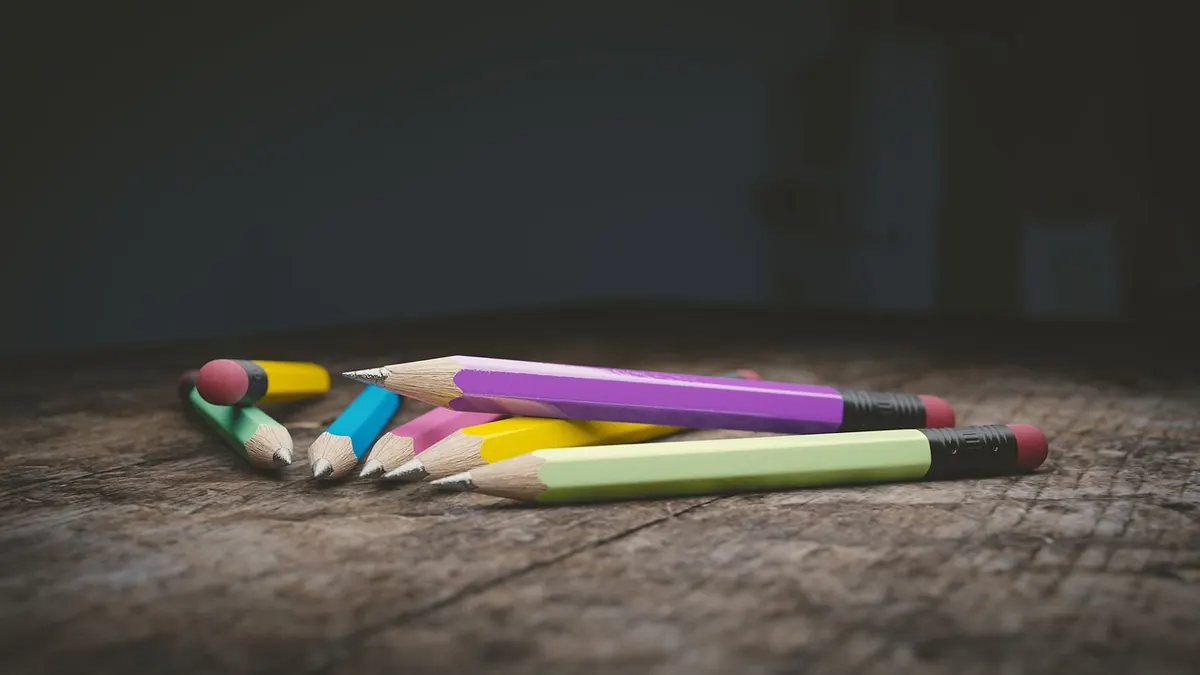
You need fewer than you think. An HB, a 2B and a 6B will cover a surprising amount of ground: HB for light outlines, 2B for most work, 6B for shadows and quick darks. If you are buying individually rather than in a set, choose a brand you have seen other artists use and buy one pencil at a time to test it. School-grade pencils can be gritty and scratchy; artist-grade ones lay down more smoothly, and the difference in price per pencil is usually small.
Add a kneaded eraser (it lifts graphite without smearing), a plastic eraser for stubborn marks, and a metal pencil sharpener. A metal one lasts years; the plastic ones split.
Paper
Paper is where beginners most often waste money. Thin copier paper buckles the moment water touches it, and a pad with a shiny surface will not hold graphite properly. Look for:
- Sketching: 120gsm or heavier, smooth or lightly textured, in a size you will actually fill. A5 or A4 beats a giant pad that stays closed.
- Watercolour: 200gsm minimum for light washes, 300gsm if you plan to wet the sheet. Cold press has a slight texture and is forgiving.
- Practice: cheap cartridge paper and printer paper are perfectly fine for drills, thumbnails and colour tests.
One habit worth breaking early: saving the good paper. A cheap pad you fill beats an expensive one you are frightened of.
Paint — pick one type
Watercolour. A student-grade pan set of around twelve colours plus a tube of white is plenty. Pans last ages and travel well. Buy a set with a decent red, yellow and blue rather than one packed with novelty hues.
Acrylics. Start with a warm red, a cool red, a warm yellow, a cool blue, white, black and burnt umber. That is enough to mix most of what you will want. Heavy-body paint is thicker and holds brush marks; fluid paint is easier for smooth coverage.
Oils. Worth leaving until later. They need solvents, ventilation and a longer working time, and the clean-up can put beginners off for good.
Resist the twenty-four-colour box. You will use six of them, and mixing your own greens and greys teaches you more than any ready-made tube.
Brushes and tools
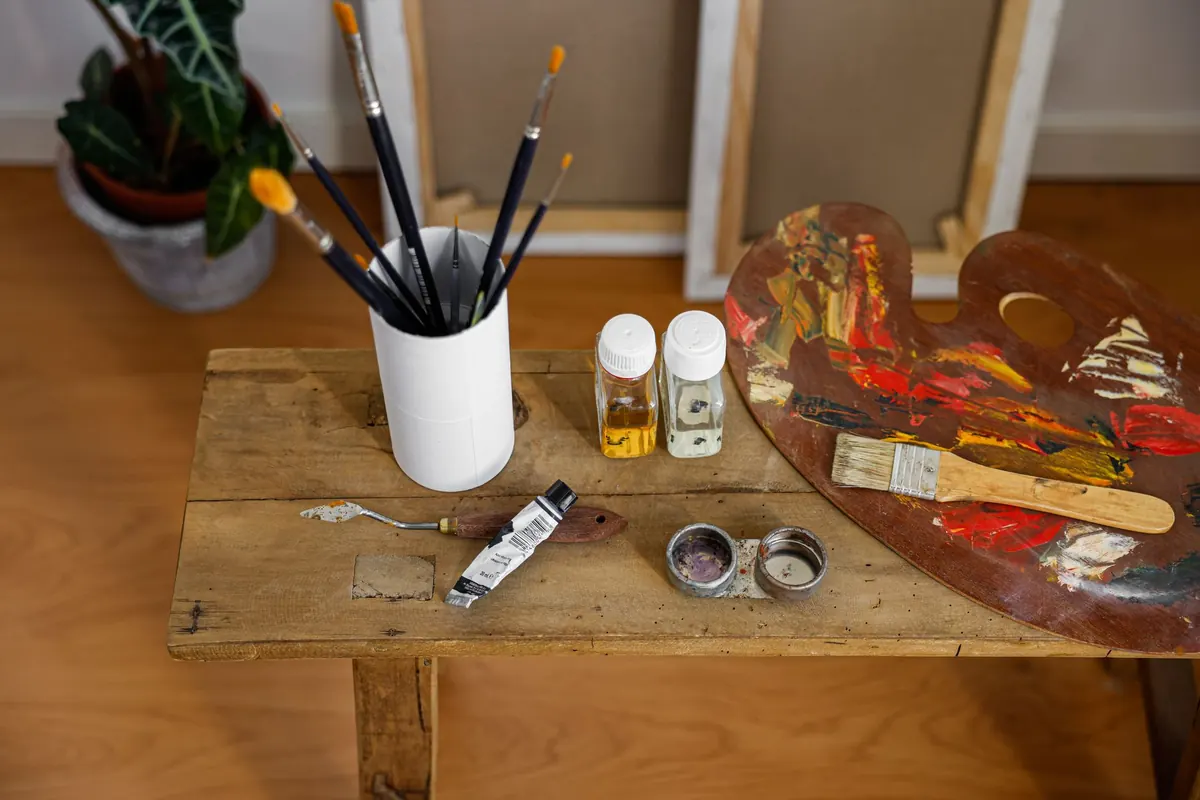
Synthetic brushes are cheaper than natural hair and perfectly good for acrylics and watercolour. A round in a medium size, a larger round or flat for washes, and a small liner for detail will carry you a long way. Bulk brush sets often contain half a dozen sizes you will never touch.
The rest of the kit is mostly things you already own: a white plate or an old ice-cream lid for a palette, a jam jar for water, kitchen roll, masking tape, and an old shirt as an apron.
Where to buy in the UK without overspending
The Works and Hobbycraft both carry own-brand ranges that are fine for a first kit. Cass Art and larger stationers stock open-stock pencils and single tubes, which lets you buy exactly what you need rather than a packaged set. Supermarkets and discount shops are reliable for sketchbooks, pencils and cheap acrylics, though quality varies between batches.
Second-hand is where the real savings hide. Charity shops regularly sell unused pads, tins of pencils and brushes. Car boot sales, Facebook Marketplace and eBay turn up full sets from people who tried a hobby and stopped. Art society sales and end-of-term student sales are worth watching too.
A few buying rules that hold up:
- Buy open stock rather than sets when you can, so you are not paying for colours you will never open.
- Compare own-brand against branded. The gap is often smaller than the marketing suggests.
- Wait for January and back-to-school sales if you can, and keep a written list so you buy on price rather than impulse.
- Check second-hand paint before paying: tubes should feel soft when squeezed, and pans should not be cracked or chalky.
Five habits that keep costs down
- Work smaller. Small paper uses less paint, fills faster and is less intimidating.
- Use both sides of the sheet for practice and warm-ups.
- Mix colours instead of buying new ones. A limited palette forces better decisions.
- Finish what you have before replacing it. Half-used tubes pile up quickly.
- Sit on any purchase over a set amount for a fortnight. If you still want it, buy it.
Spending on a hobby should never mean going into debt or stretching a tight month. If money is short, charity shops, library art groups and free tutorials will carry you a long way. And if you are worried about your wider finances, it is worth speaking to a qualified adviser rather than working it out from a shopping list.
A starter kit you can copy
- One A5 or A4 sketchbook, 120gsm or heavier
- Pencils: HB, 2B, 6B
- Kneaded eraser, plastic eraser, metal sharpener
- One fineliner, black, fine nib
- Either a twelve-pan student watercolour set or five tubes of acrylic
- Three synthetic brushes: medium round, large round or flat, small liner
- Palette, water jar, kitchen roll, masking tape
Keep it small enough to use
The best budget kit is the one that lives within reach. Store everything in a tin, a shoebox or a small bag you can pick up in one hand, and keep it somewhere visible rather than in a drawer under the stairs. A kit that takes thirty seconds to set up gets used on a Tuesday evening; a kit that takes ten minutes does not.
Replace things as they run out, not before. Add one new item only when you have a reason for it — a colour you keep failing to mix, a brush size you keep wishing you had, a paper that suits a project you are actually planning. That way the kit grows with your work rather than with your enthusiasm, and the money you save stays in your pocket.
Photo: Monoar_CGI_Artist / Pixabay